• Switched to a Menstrual Cup

    If talk about menstruation (periods) or blood makes you squeamish, you might not want to read this post.

    Seven months and eight periods ago, I traded in my tampons for a menstrual cup. I’m so glad I made the switch. Note: This post contains affiliate links, each marked with an asterisk (*).

    I had two motivations for doing this:

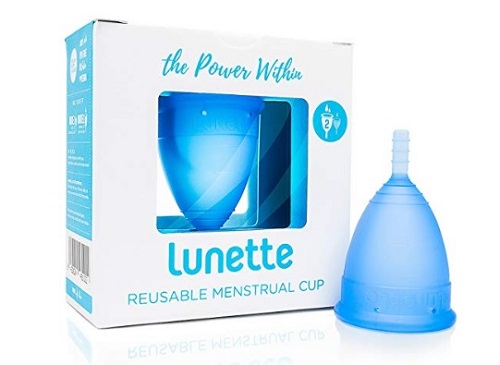
    1. Cost: My Lunette menstrual cup (Model 2)* cost $28.99 on Amazon. It will easily pay for itself in less than a year, and may have already.
    2. Environment: There’s no trash when you use a menstrual cup, just empty, clean, and re-use. Tampons, pads, applicators, and wrappers, on the other hand, pile up in landfills.

    Day 1: It Got Stuck

    It didn’t get stuck-stuck, but it took a bit to figure out how to slide the cup out of my body. Getting the cup in to my body was easy – squeeze one side in so the circle at the top looks like a “C,” and slide it in. It re-expands back to its circular shape and the little holes near the top create a suction against your skin. You have to break this seal to get it back out, which is challenging when you have tiny hands and short fingers like me. The first time I tried to get it out after wearing it a few hours (you can wear it up to 12 hours) was a complete fail. I got it out that evening, but it took 20 minutes to figure it out.

    Leaks Happen – But Not Often

    Before switching to a menstrual cup, I dealt with leaks all the time. I have designated underwear for this week. Doesn’t everyone?

    I have way fewer leaks with the menstrual cup. I’ve had two leaks because I didn’t quite get the cup into place, and I think I overflowed it once. I just wear black underwear and that seems to be enough. I don’t need to wear a pantyliner or anything for backup.

    My Own Horror Movie

    Tampons and pads work by absorbing your blood. You can’t tell how much fluid they’re actually holding. Cups are the opposite. It’s just a silicon cup that catches your blood. When you empty your cup when you’re in the shower or sitting on the toilet, it looks like a horror movie. You know exactly how much you’re bleeding.

    Thank goodness men don’t get periods. If teenage boys used menstrual cups, they’d be throwing blood at each other in high school bathrooms.

    What about Public Bathrooms?

    When you empty your cup, you’re supposed to at least rinse it before putting it back in. I’m lucky where I work only has single-user bathrooms so I can easily rinse my cup in the sink.

    With multi-user bathrooms, that’s not the case. Thankfully, I’ve only had to deal with this once. I emptied my cup, wiped it out with toilet paper (and dripped blood on my shoe), put it back in, and wiped the blood off my fingers before exiting the stall. It wasn’t a big deal.   

    No Rogue Strings (Yay!)

    Tampon users know this one: sometimes your string “goes rogue” and pulls in the opposite direction from where it should be. And it hurts. And there’s no discreet way to fix it. You have to reach into your underwear and put it back in place.

    When this happened to me, it was usually when I was out running, far away from a bathroom. It happened so frequently, I switched from tampons to “period panties” when I was running. With the cup, there’s no string to worry about.

    Equally convenient, I don’t have to worry about having a visible string when I go swimming – which is currently twice a week. (Yes, there’s a true story from my gymnastics days when I was competing in a black leotard with a visible white string!) When I’m at the pool, I always worry that I didn’t put my cup in properly and it will leak. I have a fear of finishing a lap and being confronted by a lifeguard who tells me I’m bleeding in the pool. So far, that has not been an issue at all.

    Helps with Dysphoria

    Using a menstrual cup* helps with the dysphoria I have about being non-binary and trapped in a female body. When I was using tampons, I had to change it five times a day or more on my heaviest day. That meant I had to have tampons with me, carry them through the office on my way to the bathroom, dealing with the string, and being confronted with my period each time I changed my tampon. Cups are designed to be worn for up to 12 hours, so I only have to deal with it twice a day, three times on my heaviest day. Otherwise, I can “set it and forget it.”

    Well, except for the cramps part.

  • Peeing in Public while Non-binary

    https://www.flickr.com/photos/taedc/42153342040
    Photo by tedeytan from Flickr (Creative Commons License)

    So many issues related to people who are not heterosexual or cisgender come down to two issues: what to wear and where to pee. I’m non-binary. I was assigned female at birth (AFAB), but I had my birth certificate corrected last year. Where do I pee?

    I Don’t Want to Die

    My first rule for using the bathroom in public is, “Pick the bathroom where you’re least likely to get killed.” That may seem funny at first, but it’s a serious issue when you look at the incidents of violence against and murders of transgender persons.  

    Gender Neutral Bathrooms “in the Wild”

    When possible, I prefer to use a gender-neutral bathroom. When I don’t know where the bathroom is in a particular location, I’ll ask an employee, “Where’s your gender-neutral bathroom?” to see (1) how they react to the question and (2) whether they actually have one.

    At many places, the gender-neutral bathroom is also the family bathroom or bathroom for persons with disabilities. Even at the public pool, I use the family bathroom instead of a locker room to get changed.

    Sometimes, using the gender-neutral bathroom is the fastest way to use the toilet because cisgender people will automatically wait in line for other bathrooms. Last year, I attended an event at Symphony Hall. During intermission, dozens of people were waiting in line for each bathroom. I asked an usher where the gender-neutral bathroom was, and they directed me to a nearby single-user bathroom with no line.

    Whichever Bathroom has the Shortest Line

    My general rule for situations where there is no gender-neutral bathroom and there’s no safety issue is to use whichever bathroom has the shortest line, which is usually the men’s room. I can pee standing up. Ok it’s with a shewee, but still, I can do it!

    Early on after realizing I was non-binary, I reached out to a few larger venues in the Phoenix to inquire about their bathroom policies to see how accepting they were. Surprisingly, Scottsdale Fashion Square told me that I could use whichever bathroom I felt most comfortable using. The Arizona Diamondbacks said that they have few gender-neutral bathrooms and those were the ones I should use. I’ve walked laps around that stadium. If the nearest gender-neutral bathroom is off in B.F.E. compare to my seat, I’m using the closest bathroom.

    Gendered Bathrooms – But Go Wherever

    There are public bathrooms, like the ones in Target, that are labeled for a single gender – men or women – but that have a policy that allows people to use whichever bathroom they want. The one time I needed to use the bathroom and I was set on using the men’s room, it was closed for cleaning.

    When a company has a policy like this, I wonder why they don’t just say, “These are bathrooms. Use whichever one you want.”

    All-Gender Bathrooms

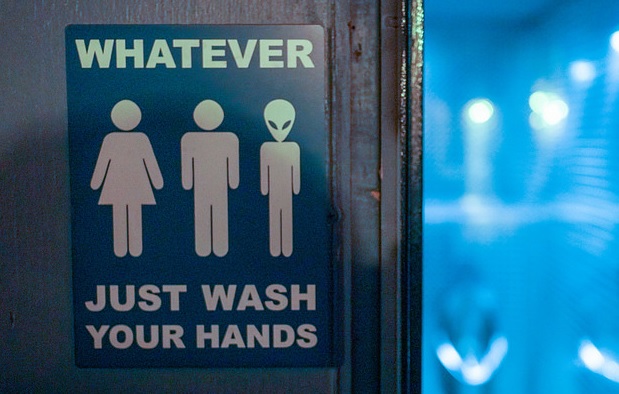
    I’m a fan of the water closet model for public bathrooms. Each stall has floor-to-ceiling walls and doors so you can’t see anything that’s going on in the stall next to you. You get as much privacy as one can get in a public bathroom.

    Last week I attended the mastermind event, Shankminds Live, in Las Vegas. The venue had one gender-neutral bathroom with five water closet stalls. At first a few people seemed a little weirded out by being in a bathroom with people of another gender, but after a few moments, they realized it was a non-issue. When I asked my fellow Shankminders about the bathroom after the event, several people (men and women) responded that gender neutral bathrooms should be the norm everywhere.

    One thing I will note about the bathroom at Shankminds is there were no urinals. From what I’ve heard from guy friends, some penis-havers like urinals – really like them. They like them so much, they wish they had one in their home.

    I respect that some people would be sad if switching to all gender-neutral bathrooms meant losing the chance to pee at a urinal, but that doesn’t have to be the case. I know of at least one all-gender bathroom at a club called The Mint where there is a urinal area where people can pee standing up where they won’t be seen by the water closet users.

    Remember: You all have gender-neutral bathrooms in your home. Sharing a toilet with another gender hasn’t killed any of us yet. It’s only an issue if you make it one.

  • LGBTQ Bills Introduced in Arizona

    I did a quick search on the proposed bill for this session in the Arizona legislature and saw that there are at least five bills that are related to LGBTQ rights. I am hopeful that we’ll see progress this year.

    HB2289: Non-binary Driver’s Licenses

    This bill is my baby. This bill will allow the MVD to issue non-binary driver’s licenses and identification cards. All you would nee to do to prove your gender is to submit an affidavit that says you are non-binary.

    This bill has the same verbiage as last year’s bill that died in committee. I was ecstatic to see that this bill has 16 sponsors, but then I saw that it was similar to the number of sponsors it had last year. They are all Democrats, but I believe some Republicans will be willing to support this bill, if for no other reason, because so many other states offer non-binary birth certificates and driver’s licenses. We’re going to have people who move here who only present non-binary documents. If the State refuses to issue non-binary driver’s licenses to these people, they’re asking for a lawsuit.

    HB2156: LGBTQ Equality in Employment

    It’s almost shocking that this isn’t a law yet. This bill will prohibit employers from discriminating against employees based on gender, gender identity, gender expression, sexual orientation, or marital status.

    My first job in Arizona was for the Maricopa County Department of Public Health. At orientation, the presenter went on and on about how they wanted everyone to feel comfortable working for the county and we should report any issues. I flipped to the back of the employee handbook to read the County’s non-discrimination policy. My heart sank when I saw that it didn’t include sexual orientation. This bill will prevent others from having the same experience and provide recourse against bigoted employers.

    SB1047: Conversion Therapy Ban

    If only one of these bills becomes a law, I bet it will be this bill that will make conversion therapy illegal for anyone under 18 years old. Conversion therapy for minors is already banned in 15 states and Washington D.C. Arizona, and every state, should be on this list. This bill also has support from both Democrats and Republicans.

    HB2290: Death Certificates

    This will require death certificates issued in Arizona to reflect the decedent’s gender identity. The murder rate in the transgender community is alarming, and there are issues with the police and the press mis-gendering victims as well as using the person’s “dead” name. This bill will require the state to acknowledge the person’s correct gender if it has been changed on a legal document. If the deceased has multiple documents with different genders, the gender on the most recently issued one will be used.

    Not every transgender person has their gender or name legally changed, so this bill may not help them, but it will help those who have gone through the process. In Arizona, if you are female-to-male or male-to-female transgender, you can legally change your gender on your driver’s license and social security record.

    HB2381: Crime Statistics

    The Department of Public Safety collects information about whether prejudice played a role in a crime. Currently it collects data about prejudice based on race, color, religion, national origin, sexual orientation, gender, and disability. This bill will add gender identity and gender expression to this list. Hopefully this will lead to more complete statistics.

    It’s encouraging to see Arizona lawmakers being so progressive. This is only the beginning of the legislative process. Each bill will have to get through committee and then receive a simple majority vote in the Arizona House (31 votes) and Senate (16 votes) before it will go to the Governor’s desk for a signature.